Saturday, 5 September 2015
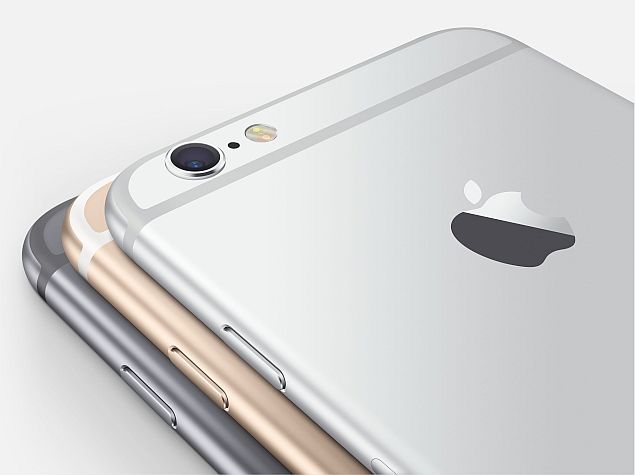
Apple patent looks at fuel cell system for portable device
James Titcomb, Telegraph technology news editor, said thepatent application suggests a number of different energy sources.
He said that "the energy could come from 'a fuel cartridge which is detachably affixed to the fuel cell system', meaning rather than recharging, one would simply replace the device'scartridge when it had run out."
Ben Lovejoy in 9to5Mac also talked about the replacing aspect. "There is, of course, no such thing as a free lunch, and fuel cell systems require the fuel to be replenished once it is exhausted, which the patent addresses by referencing removable cartridges."
The patent said that "Exemplary fuels that can be used with a hydrolysis reaction can include: Sodium Borohydride, Sodium Silicate, Lithium Hydride, Magnesium Hydride, Lithium Borohydride and Lithium Aluminum Hydride."
The fuel, said the inventors, may also take the form of pure hydrogen (e.g., compressed hydrogen gas or liquid hydrogen). In that case, "the fuel cartridge may contain components such as a metering device (e.g., a valve) and a pressure gauge. Ideally, the fuel has a relatively low life cycle carbon footprint, is not toxic, and generates a waste product that is amenable to being repeatedly re-charged with hydrogen and is not toxic."
The title of the patent is "Fuel Cell System to Power a Portable Computing Device" and it was filed in March this year by Apple. The application lists six California-based inventors.
Smartwatches, intelligent homes shine at Berlin mega gadget show
Smartwatches, intelligent homes and drones that follow users wherever they go are on show at Berlin's mega consumer electronics fair, which opened its doors to the public on Friday.
Smartwatches go round
Samsung, Huawei and Motorola pick spherical faces for their latest smartwatch offers, giving them a distinctly different look to arch-rival Apple Watch, which has a rectangular face.
Keeping track of emails, water versus caffeine intake or how many steps taken in a day, are among the myriad functions offered by the intelligent wristwatches.
The Android smartwatch makers are hoping that their models will claw back some market share from Apple, which shipped about four million smartwatches globally in the second quarter, market researcher Strategy Analytics estimated in July.
Samsung had shipped just 400,000 units in the same period.
Thursday, 23 April 2015
Endless Kickstarter Project Wants To Make an Affordable Computer
Our Kickstarter of the Week
series is a look at the world of crowdfunding. We search through sites like Kickstarter and Indiegogo to find interesting projects for you to back.
Some of the most interesting new products we've seen - ranging from fun oddities to what could conceivably be the next big thing - have come from these sites instead of big companies. Not every project we highlight has to be the next Oculus Rift virtual reality headset or Pebble smartwatch - some of the projects we pick are just fun and weird.
And of course, there is always the chance that a project will not work out even if it gets funded. But if you're willing to take a risk and can afford to write off a little money, then there's a lot to look at and maybe fund. One project we thought was interesting was the Endless computer.
The idea behind Endless is that the mobile revolution happening in India and the rest of the developing world is not because people prefer using mobiles as their only computing experience, but because this is the only affordable system available. The idea behind Endless is to use mobile hardware to create a cheap computer that can be plugged into a TV, and be more useful than a mobile phone thanks to a custom operating system.
With Endless, the target is not the poorest people in developing countries but rather those people who live in tier-2 or tier-3 cities, for whom this would be a cheaper alternative than a full computer, though still more expensive than some Android set-top-boxes. The difference is that the Endless computer would come pre-loaded with most software that people need, and could be used completely offline if required.
The design of the Endless box is unique - to us, it looks something like one of the ghosts from Pac-Man, all bright colours and cheerful curves. The team has also put together a Linux-based operating system that is easy to use and suited for desktop users. The OS is open source and while the applications on the computer are proprietary for now, the team plans to open up the OS for third-party apps as well.
The goal was to create something that is affordable, easy to use, and suitable for both entertainment and education. Since Internet connections in many parts of the developing world are not dependable, the team also pre-installs the computers with over 100 applications that can be used offline. There are apps ranging from spreadsheets to accounting tools for small businesses, Libre Office which would be useful for students as well,
series is a look at the world of crowdfunding. We search through sites like Kickstarter and Indiegogo to find interesting projects for you to back.
Some of the most interesting new products we've seen - ranging from fun oddities to what could conceivably be the next big thing - have come from these sites instead of big companies. Not every project we highlight has to be the next Oculus Rift virtual reality headset or Pebble smartwatch - some of the projects we pick are just fun and weird.
And of course, there is always the chance that a project will not work out even if it gets funded. But if you're willing to take a risk and can afford to write off a little money, then there's a lot to look at and maybe fund. One project we thought was interesting was the Endless computer.
The idea behind Endless is that the mobile revolution happening in India and the rest of the developing world is not because people prefer using mobiles as their only computing experience, but because this is the only affordable system available. The idea behind Endless is to use mobile hardware to create a cheap computer that can be plugged into a TV, and be more useful than a mobile phone thanks to a custom operating system.
With Endless, the target is not the poorest people in developing countries but rather those people who live in tier-2 or tier-3 cities, for whom this would be a cheaper alternative than a full computer, though still more expensive than some Android set-top-boxes. The difference is that the Endless computer would come pre-loaded with most software that people need, and could be used completely offline if required.
The design of the Endless box is unique - to us, it looks something like one of the ghosts from Pac-Man, all bright colours and cheerful curves. The team has also put together a Linux-based operating system that is easy to use and suited for desktop users. The OS is open source and while the applications on the computer are proprietary for now, the team plans to open up the OS for third-party apps as well.
The goal was to create something that is affordable, easy to use, and suitable for both entertainment and education. Since Internet connections in many parts of the developing world are not dependable, the team also pre-installs the computers with over 100 applications that can be used offline. There are apps ranging from spreadsheets to accounting tools for small businesses, Libre Office which would be useful for students as well,
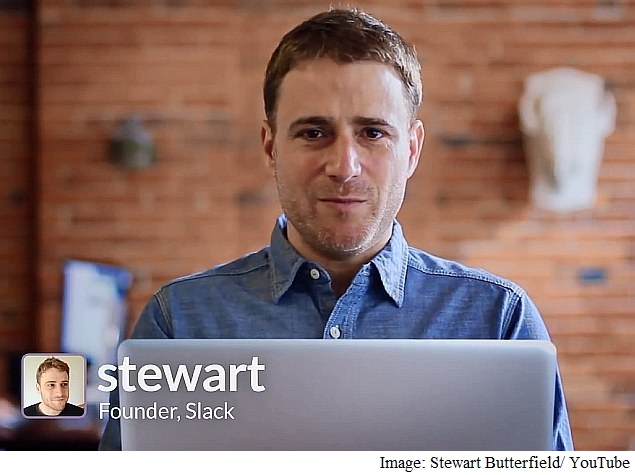
Is Slack Really Worth $2.8 Billion? A Conversation With Stewart Butterfield
Stewart Butterfield, chief executive of Slack, in the company's office in San Francisco.Credit Jason Henry for The New York Times
When I recently wrote about Slack, a corporate messaging app that has aspirations to replace email, investors valued the company at $1 billion. That was a month ago. Today, the start-up announced that it has raised $160 million from a half dozen investors, and that it is now worth $2.8 billion.
Slack, which is just a year old, has more than 750,000 daily active users, 200,000 of whom are paying customers. By many estimates, it is the fastest-growing business application of all time.
Still, Slack's escalating valuation in such a short time seems destined to spark questions about the rising possibility of a tech bubble. I asked Stewart Butterfield, Slack's co-founder and chief executive, about the company, its growth and the bubble in a wide-ranging conversation this morning.
Q. I'm surprised that you're raising money, because last time we talked you said that you had enough money.
A. Do you have enough money?
Q.No. But it's not free money, right?
A.It's pretty straightforward. I've been in this industry for 20 years. This is the best time to raise money ever. It might be the best time for any kind of business in any industry to raise money for all of history, like since the time of the ancient Egyptians. It's certainly the best time for late-stage start-ups to raise money from venture capitalists since this dynamic has been around.
And as a board member and a C.E.O., I have a responsibility to our employees, to our customers. And as a fiduciary, I think it would be almost imprudent for me not to accept $160 million bucks for 5-ish percent of the company when it's offered on favorable terms.
We don't have an immediate use for that money. But it increases the value of our stock and can allow potential employees to take our offers, and it reinforces the perception for our larger customers that we'll be around for the long haul. All of that stuff.
Q.Is there any downside?
A.Did you watch the last episode of "Silicon Valley"? For a company that's very early stage - their product isn't necessarily out, they don't know if their business model is going to work, they don't know what conversion rates and retention rates are going to be like - it can be fairly high risk. We've seen that in the past. A new company before it has even started has achieved a high valuation, and that hasn't worked out well.
But it's not really a factor at this stage. Growth has been unprecedented. It's crazy. So I think there's less downside risk here.
The market could turn, and the kinds of valuations you get from V.C. investors might not be as favorable in six months or a year. But on the other hand, we will have a couple hundred million dollars in the bank, and that's a great position to be in.
Q.Are you saying that having the money in the bank in case the V.C. market turns bad - was that a primary reason to raise it?
A.It's one of the best reasons. Let's say we were a gold-mining business, or maybe just a person who had a whole bunch of gold. And gold prices are going crazy. Selling some of the gold now, so you have cash in the bank in case things change in the future, is not a bad idea.
It's a hedge, and a hedge that's unbelievably good for us. It's a lot of money. In the case where everything turns to [expletive], we will look pretty smart.
Q.You've said before that valuations are "arbitrary." Is Slack's almost $3 billion valuation arbitrary?
A.Public investors often have some underlying rationale for getting to a decent price. In this market, there are bets about how big the company's market can be, how good the team is - but there is also just a whole lot of supply and demand.
And there are a lot of investors who have a lot of money. So when I say arbitrary, I mean that it's not coming from some airtight, textbook formula for how to value these types of companies. It's based on how many there are - and there's only one Slack - and if you would like to invest in this Slack, this is the price that it costs.
It's very highly influenced by other factors: Interest rates being low, there's a lot of money in V.C., funds get larger as a result, but the number of deals that they do remains about the same. So therefore the amount that they invest per deal goes up, which means the valuation goes up.
Q.So do you think Slack is worth $3 billion?
A.It is, because people say it is.
I'm not trying to be trite, and I know why you're asking, but if you go down to the fundamental level, we all have an agreement about what things are worth - until we don't.
Maybe the better question is, how great is the risk that the consensus about what Slack is worth will change dramatically?
There is a risk that investors will say, maybe this company, at this time, is only worth half what we thought. But since we came back from the holidays, everything doubled. That's a crazy rate of growth, but it has remained constant since we launched. We can't keep that forever - the law of large numbers, we'll start to saturate markets. But obviously we're not there yet. I don't feel like there are any serious vulnerabilities in the business. So I think even if our valuation were to go down, it would go down until we catch up to it.
Q.So it's a great time to be raising money as a founder. But if you were looking at the tech economy from a different perspective, would you still say it's a good thing that it's so easy to raise money?
A.I'd say it's probably good. The odds of new companies doing interesting things getting started would go up. I'm sure that it can have some bad effects in the sense of distorting young founders' perceptions about what their companies should be worth, and frustrating their expectations, potentially. And there are knock-on effects that are bad - pressures on salaries, pressure on rents. We signed a lease on our San Francisco office at $62 a square feet, and we sublet it at $75, nine months later. And down in Palo Alto, people are paying $120 per square foot, and not even fancy offices. And it's not a great thing, necessarily, for our local economy.
Q.But is it a great thing for the world? You're getting a whole bunch of money you don't really need that you probably won't use. What is the use of giving you $160 million that you're just going to keep in the bank for a rainy day?
A.Eventually, we will find a use for it, at least I hope we do. Now, as opposed to this money being used to house the homeless or feed starving children - but that's not where this money would otherwise go. This is investment capital. One could certainly make the argument that investment capital has inflated out of proportion to the rest of the economy. But it's not like if they hadn't given the money to us, they would have given to a homeless person instead.
Q.But the reason people outside of tech look at a story like a year-old company being valued at $3 billion is that they wonder, what if you're wrong? What if your growth is an illusion and it won't continue? Or what if there's something else you're missing? And not just you, but a whole bunch of other companies like you that have been raising money so fast. Do you worry about that - that there may be some kind of systemic problem?
A.Yes and no. As a citizen, I don't think it would be a really bad thing in the end if all these investors lose a great deal of money, because it's really not a very large percentage of the overall economy. I'm quoting Marc Andreessen here: The entire amount of V.C. funding that happened last year was $50 billion. That's compared to the total market of share buybacks and dividends by public companies in the U.S. being $1 trillion. So it's one-twentieth of the overall public market dynamics, which is a small percentage of the overall economy, so it's not going to make a difference to most private citizens whether V.C.s lose a lot of money here.
It does make a difference to me personally in that sense that it matters what happens to our employees, partners and the investors that I work with directly.
Q.So what are the possible things you can do with this money?
A.Acquisitions would be one. Advertising could be another. We may want to be able to spend beyond our means to grow the business. It's nice to have all kinds of options. We might have to defend ourselves against predators. We might find opportunities to do something better or faster that requires capital. At some point we'll start advertising, and let's say advertising is effective for us - so we may put tens of millions of dollars into it. I'm not saying that's what we'll do, but it's nice to have the option.
Q.So you go out and raise money and you don't have to tell the investors what it's for?
A.Nope. They want to own some of the company, and they believe it will be worth more in the future. And that's it.
Monday, 13 April 2015
iBall Andi 5M Xotic With 5-Inch Display, 2GB of RAM Launched at Rs. 8,199
iBall has launched the Andi 5M Xotic smartphone in India, pricing it at Rs. 8,199. The iBall smartphone was previously listed for purchase in February by an online retailer at Rs. 8,950.
According to company, the biggest USP of the iBall Andi 5M Xotic is its 2GB of RAM at the price, as well as 16GB of built-in storage. The dual-SIM smartphone runs on Android 4.4 KitKat that the firm says will be upgraded to Android 5.0 Lollipop. It features a 5-inch qHD (540x960 pixels) IPS display that offers a pixel density of 220ppi.
The smartphone packs a quad-core 1.3GHz Cortex-A7 processor coupled with 2GB of RAM. Besides an 8-megapixel autofocus rear camera with BSI sensor and LED flash, the iBall Andi 5M Xotic also includes a 3.2-megapixel front-facing camera. The 16GB of inbuilt storage is expandable via microSD card (up to 32GB).
According to company, the biggest USP of the iBall Andi 5M Xotic is its 2GB of RAM at the price, as well as 16GB of built-in storage. The dual-SIM smartphone runs on Android 4.4 KitKat that the firm says will be upgraded to Android 5.0 Lollipop. It features a 5-inch qHD (540x960 pixels) IPS display that offers a pixel density of 220ppi.
The smartphone packs a quad-core 1.3GHz Cortex-A7 processor coupled with 2GB of RAM. Besides an 8-megapixel autofocus rear camera with BSI sensor and LED flash, the iBall Andi 5M Xotic also includes a 3.2-megapixel front-facing camera. The 16GB of inbuilt storage is expandable via microSD card (up to 32GB).
Asus ZenFone 2: First Impressions
Asus last year launched three models in its ZenFone series - the ZenFone 4,
ZenFone 5, and ZenFone 6 - in India. The company saw a massive response
from Indian consumers thanks to its low prices, which also helped the
company stand out in a market filled with established local and
international players.
The Taiwanese company is gearing up to repeat the same strategy, though this time Asus has a star performer taking the centre stage - the ZenFone 2 (ZE551ML) with 4GB of RAM. Asus has confirmed that there will be three versions of the ZenFone 2 range launching in India later this month: the ZE551ML (with 4GB of RAM), the ZenFone 2 ZE551ML (with 2GB of RAM), and the ZenFone 2 ZE550ML (with a 5.5-inch HD display). The Asus ZenFone 2 ZE500CL, which features a 5-inch HD display, will not be launched in India.
Monday, 30 March 2015
HP Stream 11-d023tu Review: Low-Cost Laptop With a Bold Sense of Style
Entry-level laptops usually have just the bare minimum
specifications, but they're powerful enough to handle most everyday
tasks. Sometimes, compromises are made in order to accommodate otherwise
expensive features such as a touchscreen, and sometimes style is more
important than performance. Today, we also have an emerging category of
tablets that run Windows and come with external keyboards so that they
can be used productively when that's needed. In all this, it can be hard
to decide which tradeoffs to accept and where the right balance lies.
HP has come up with a device that gives us another option - the new Stream 11-d023tu. It's part of a series of devices that emphasise portability and connectivity, and so it breaks from the usual common standards that we take for granted when it comes to laptop specifications. The Stream lineup also includes a laptop with a 13-inch screen and a tablet with an 8-inch screen, but what we have today is the smaller clamshell model, the Stream 11.
While it doesn't have any powerful hardware to boast of, it does have an integrated 3G modem. You can just pop a SIM card into a slot on the side and you'll be online without a Wi-Fi hotspot. That's a pretty unique feature, and is a lot more convenient than using a 3G dongle.
Look and feel
There's no getting around it: The HP Stream 11 is an eye-catching device, and not everyone will think this is a good thing, or that it's been done for the right reasons. HP has experimented withcolourful pastels before, but the Stream 11 takes unusual design to a whole new level. The entire exterior is a bright blue, except for a mirror-finished HP logo in the centre of the lid. The texture feels good, but it in our time with the device it picked up smudges, sweat and oil from our fingers very easily, and even got scuffed when being put into or pulled out of bags.
However, the real shock comes when you open the lid - the keyboard deck has a bright blue gradient running from the back to the front and because that obviously wasn't unique enough, someone in HP's design studio decided to throw in a white polka-dot pattern as well. The keyboard keys are also white, and so there really is a lot going on when you look down at the lower half of this device.
Sure, it stands out, but that really isn't always a good thing. HP says it was clearly meant to make the Stream 11 stand out in a crowd of black and grey laptops and that's certainly true. As with any design so distinct, there will be people who buy the Stream 11 for its looks alone and an equal (or greater) number who don't buy it even if they think it's a good product.
There is no variant with a sober colour scheme. In fact there is a bright pink option in some markets, and HP is currently undecided whether or not to introduce it in India - so this is the company's idea of safe and neutral!
For more information visit herehttp://gadgets.ndtv.com/laptops/reviews/hp-stream-11-d023tu-review-low-cost-laptop-with-a-bold-sense-of-style-675161?pfrom=home-gadgetsreviews
comments are as always welcomed....
HP has come up with a device that gives us another option - the new Stream 11-d023tu. It's part of a series of devices that emphasise portability and connectivity, and so it breaks from the usual common standards that we take for granted when it comes to laptop specifications. The Stream lineup also includes a laptop with a 13-inch screen and a tablet with an 8-inch screen, but what we have today is the smaller clamshell model, the Stream 11.
While it doesn't have any powerful hardware to boast of, it does have an integrated 3G modem. You can just pop a SIM card into a slot on the side and you'll be online without a Wi-Fi hotspot. That's a pretty unique feature, and is a lot more convenient than using a 3G dongle.
Look and feel
There's no getting around it: The HP Stream 11 is an eye-catching device, and not everyone will think this is a good thing, or that it's been done for the right reasons. HP has experimented withcolourful pastels before, but the Stream 11 takes unusual design to a whole new level. The entire exterior is a bright blue, except for a mirror-finished HP logo in the centre of the lid. The texture feels good, but it in our time with the device it picked up smudges, sweat and oil from our fingers very easily, and even got scuffed when being put into or pulled out of bags.
However, the real shock comes when you open the lid - the keyboard deck has a bright blue gradient running from the back to the front and because that obviously wasn't unique enough, someone in HP's design studio decided to throw in a white polka-dot pattern as well. The keyboard keys are also white, and so there really is a lot going on when you look down at the lower half of this device.
Sure, it stands out, but that really isn't always a good thing. HP says it was clearly meant to make the Stream 11 stand out in a crowd of black and grey laptops and that's certainly true. As with any design so distinct, there will be people who buy the Stream 11 for its looks alone and an equal (or greater) number who don't buy it even if they think it's a good product.
There is no variant with a sober colour scheme. In fact there is a bright pink option in some markets, and HP is currently undecided whether or not to introduce it in India - so this is the company's idea of safe and neutral!
For more information visit herehttp://gadgets.ndtv.com/laptops/reviews/hp-stream-11-d023tu-review-low-cost-laptop-with-a-bold-sense-of-style-675161?pfrom=home-gadgetsreviews
comments are as always welcomed....
HTC Desire 820s Review: New Brains in the Same Body
Nearly a year ago, HTC launched the Desire 816. This phone had a serious impact on the market, because it offered solid specifications and quality at a mid-range price. This was followed by the HTC Desire 820, another successful device with an impressive feature list. The Desire 820 was also one of the first smartphones to feature Qualcomm's 64-bit octa-core Snapdragon 615 SoC, and showed HTC's intent to win over the mid-range market.
Just a few short months after the HTC Desire 820 (Review | Pictures), we have the HTC Desire 820s. Not a lot has changed between then and now; the 820s is in almost every way the same phone as the 820. There are only a few changes, and we find out exactly how much of an impact those make.
Specifications and software
It isn't just the physical appearance of the HTC Desire 820s that matches its predecessor; the spec list is nearly identical as well. The device features the same 13-megapixel rear and 8-megapixel front cameras as the 820. The screen, as mentioned, is the same 5.5-inch 720p affair. Internal storage is still 16GB, and RAM remains at 2GB as well. There's also 4G compatibility, Bluetooth 4.0 and Android Kit Kat 4.4.4 overlaid with HTC Sense 6.
The only major differences are that expandable storage support is now capped at 32GB, and the SoC used is the MediaTek MT6752. The new MT6752 SoC is one of the Chinese semiconductor specialist's newest offerings. It means serious business, with 64-bit support and eight cores of processing power.
Camera
With a 13-megapixel sensor at the rear an 8-megapixel one at the front, the Desire 820s offers a camera combination that rivals those of many flagship devices. Just like the Desire 820, it works very well in good light and satisfactorily in low light, while the front sensor does an above-average job with selfies. Low light and video shooting are as would be expected from a mid-range smartphone.
The camera app itself remains clean and functional, but doesn't offer as many features as the one on higher-end HTC phones. It still has a large set of options such as burst mode, slow motion video and GPS geotagging. We expected the MT6752 processor to make a difference to the camera's processing abilities and speed, but it appeared to be doing the same as the Snapdragon 615 SoC on the Desire 820.
Performance
This is where the HTC Desire 820s feels different from the Desire 820, and our impressions are wholly positive. The new SoC is an improvement over MediaTek's earlier ones, and is fully capable of giving the more established Qualcomm's offerings a run for their money.
Verdict
The HTC Desire 820 was a great device with solid all-round performance, and the Desire 820s manages to improve upon that in a small but significant way. It's a good phone with great performance which should help HTC stay on par with its competitors.
The HTC Desire 820s may not necessarily be the best smartphone in this price bracket, but it's still an impressive device that looks good, feels nice and performs great. We would recommend it to anyone looking for a mid-range smartphone, especially those who don't want to deal with the headaches of flash sales and invite-only purchase systems. It's a solid device that you can buy without any worries right now, and one that will serve you well.
For more info reach us @technologynewsone.blogspot.com..
source:http://gadgets.ndtv.com/mobiles/reviews/htc-desire-820s-dual-sim-review-new-brains-in-the-same-body-674964?pfrom=home-gadgetstop
LG Spirit With Android 5.0 Lollipop Launched at Rs. 14,250
LG has launched one of its new curved mid-range smartphones in India, the LG Spirit, listing it on its country-specific website at Rs. 14,250. The company has not yet announced availability details for the smartphone.
The LG Spirit was globally unveiled in February along with three other smartphones LG Magna, LG Leon and the LG Joy. The firm had showcased all the smartphones during MWC 2015 this month.
(Also see: LG Magna, LG Spirit, LG Leon, and LG Joy First Impressions)
As per specifications, the dual-SIM (Micro-SIM) LG Spirit (LG H-422) runs Android 5.0 Lollipop and includes 4.7-inch HD (720x1280 pixels) resolution display with pixel density of 312ppi. The display is curved slightly, with a 3000mm radius curvature. In India, the smartphone packs a 1.3GHz quad-core processor coupled with 1GB of RAM.
The LG Spirit features an 8-megapixel rear camera, and a 1-megapixel front facing camera. The 8GB of inbuilt storage is expandable via microSD card (up to 32GB). Connectivity options on the LG Spirit include 3G, Wi-Fi, Bluetooth, GPS/ A-GPS, and Micro-USB. The handset measures 133.25x66.12x9.95mm and is backed by a 2100mAh battery.
So far, there is no word on when the firm will launch the 4G-enabled variant of the smartphone, the LG Spirit LTE, in India. Notably, LG has on Monday also announced the start of the global rollout of its four new mid-range smartphones, the Joy, Leon, Magna, and Spirit, starting with South America followed closely by Europe, Asia, Middle East Africa and North America.
See full LG Spirit specifications@http://gadgets.ndtv.com/lg-spirit-2412
So....what are your views about this budget smartphone??????? Keep us updated with your thoughts @technologynewsone.blogspot.com.....comments and feedback welcomed.....
Sunday, 29 March 2015
iPhone 6S, iPhone 6S Plus, iPhone 6C to Launch This Year: Report
Apple is expected to launch three new iPhone models this year - the iPhone 6S, iPhone 6S Plus, and iPhone 6C - claims a report citing industry sources.
While the report suggests that the iPhone 6S and iPhone 6S Plus will be the incremental updates from last year's iPhone 6 and iPhone 6 Plus, it adds the iPhone 6C will be cheaper variant of the handset that the Cupertino-based giant will launch to tap the emerging markets, which also includes India. All three are due in the second half of 2015.
No reasoning was given as to why the 'S' in the model names will be upper-case. Digitimes suggests that the new iPhone models will pack LTPS panels supplied by various companies including Japan Display, Sharp and LG Display, and will also feature Corning Gorilla Glass protection. The report adds that the iPhone 6S and iPhone 6S Plus will use the A9 chips while the iPhone 6C will be backed by A8 chips. Other highlight features such as NFC and fingerprint scanner will be present on all three iPhone expected to launch later this year.
The rumoured 4-inch iPhone has been in news for some time and was claimed to be targeted at "female users". The handset, tentatively called iPhone 6C, is said to replace the iPhone 5c, which was priced in an entry-level to mid-range smartphone segment for Apple, according to sources in Taiwan's handset supply chain. The report stresses that Apple will work on the iPhone 6C's design, pricing and timing of the launch.
One of the sources pointed out, "The adoption of a plastic case for the 5C, which made the iPhone look cheaper than its family products, contributed to lower-than-expected sales of the model." Another sources however added that Apple might still prefer plastic cases for the iPhone 6C as it helps check the production costs.
Further commenting about the pricing of the iPhone 6C, a source added that it should be priced around $400-500 (roughly Rs. 25,000-31,000) in the US. "Shipment performance of iPhone devices in emerging markets, including India, Africa and Latin America, has been flat, as consumers in these markets are more concerned about pricing," notes the report.
The 4-inch iPhone could also tie-in with a recent Wall Street Journal report that claimed Apple is working on a Pink variant of the handset as the successor the iPhone 5c. The report had added the Cupertino giant was looking to use its new pressure-sensitive Force Touch technology introduced in the new 12-inch MacBook to its next iPhone models as well.
In another report Digitimes claims that the rumoured iPhone 6C will be manufactured by Wistron while the iPhone 6S and iPhone 6S Plus will be assembled by Foxconn and Pegatron. It adds that Wistron and Compal Electronics joined Apple as manufacturing partners recently and that while the former handles older generation iPhone models; the latter assembles iPads.
How to Activate WhatsApp Calling
WhatsApp is rolling out the voice calling feature to all Android users. WhatsApp, the most popular messaging app in the world with over 700 million monthly active users, recently introduced this feature and initially it was available to only a handful of users. However, since then WhatsApp is making free voice calling available to all Android users.
If you are not on Android you'll have to wait a while to get this feature. But if you use Android, and haven't yet activated voice calling on WhatsApp, you can follow this procedure. If these steps don't work, it's possible WhatsApp has temporarily paused the rollout, and you should try again after some time.
If you are ready to activate WhatsApp free voice calling, remember the process isn't as simple as updating WhatsApp to start using these features. It involves a couple more steps that you need to follow. We've described these below, so take a look to enable voice calling on WhatsApp for Android.
If you are not on Android you'll have to wait a while to get this feature. But if you use Android, and haven't yet activated voice calling on WhatsApp, you can follow this procedure. If these steps don't work, it's possible WhatsApp has temporarily paused the rollout, and you should try again after some time.
If you are ready to activate WhatsApp free voice calling, remember the process isn't as simple as updating WhatsApp to start using these features. It involves a couple more steps that you need to follow. We've described these below, so take a look to enable voice calling on WhatsApp for Android.
- Download the latest version of WhatsApp for Android from here
. The latest version on WhatsApp's website is 2.12.14, but if you're downloading from Google Play, ensure that your device has version 2.11.561. Older versions don't support this feature for all users. - Once you have the latest version of WhatsApp installed on your Android phone, ask someone who has WhatsApp calling enabled to make a WhatsApp call to your number.
- Multiple users have reported that giving a missed call doesn't work. You'll have to receive the call and wait for a few seconds before disconnecting to activate WhatsApp voice calling.
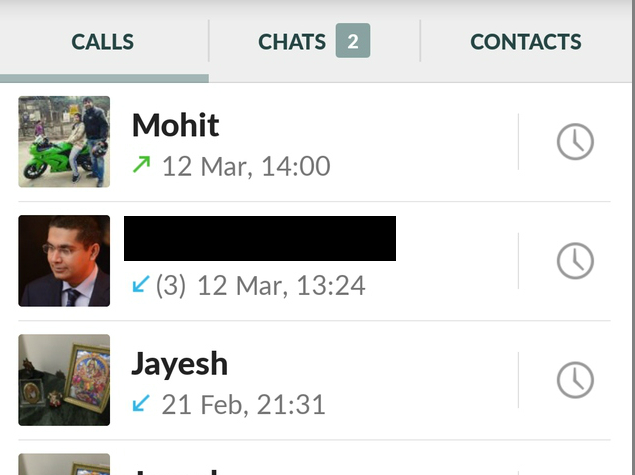
- When the feature is enabled on your smartphone, you'll see a new three-tab layout on WhatsApp, one each for Calls, Chats and Contacts.
40 years of gadgets come out to play
Technology, even equipment that's long outdated and shunted aside, can still strike an emotional chord.
Just ask Kimon Keramidas, curator of "The Interface Experience," an exhibit that rounds up tech milestones from 40 years of personal computing for visitors to see and touch. He said almost everyone has a favorite item they make a beeline to and greet like an old friend.
"It's either 'Oh my God, it was so great!' or 'Oh my God, that was so hard to use,'" Keramidas said. "It's an emotional thing. People are connecting at more than just an intellectual level."
The show, which opens Friday at the Focus Gallery of the Bard Graduate Center in New York City, offers visitors a trip through history with what is essentially a gadgety greatest hits. On display are more than 25 different devices, as well as a wall of more than a hundred mobile phones (what Keramidas calls his cell phone "petting zoo") -- all of which can be touched and, in some cases, played with.
Twitter Launches Live Streaming Video
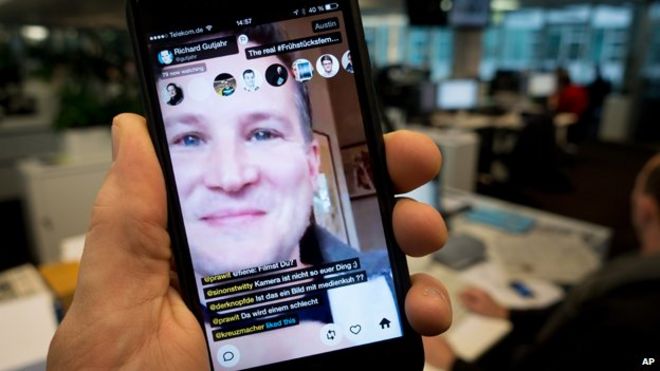
Now Twitter, which just days ago acted to prevent Meerkat tapping into its own users quite so easily, has launched a rival service called Periscope. Battle has been joined and there's unlikely to be more than one winner.
Both apps provide an extremely simple way of going live from your mobile phone with just a couple of taps - and letting the world see what you see. This is not particularly new - services like Qik, Bambuser and Livestream have allowed you to go live from your phone for some years. But Meerkat and Periscope have come along just as many mobile users have easier and cheaper access to the necessary data connection and they also make it far easier to connect with an audience.
To start a Meerkast (as they're known) you just fill in a subject box describing what you are about to show and press "stream". Then those who follow you on the app get an alert telling them that you are live, and they can choose to watch and send you messages which pop up at the bottom of the screen. I've used the app to stream a speaker at a conference, a Raspberry Pi contest at the Science Museum and even a tech event hosted by the Duke of York inside a royal palace.
You quickly see how many people are watching - I think my highest audience has been 47, and apparently a Meerkast with the White House press secretary attracted several hundred viewers. Not exactly the world coming together, but then this is a very new app. Once you stop streaming, anyone who arrives too late has no way of retrieving your Meerkast. As I've often found, it can be frustrating to get a message saying someone is streaming, only to find it's over by the time you tune in.
One really annoying aspect is that you can only film in portrait mode, so although you can save the video you shoot onto your phone, you wouldn't want to show it on a standard 16:9 screen.
Periscope works in a similar way, but I found it performed just slightly better - perhaps because until today it's only had a few test users. I did not get the connection issues that occasionally saw my Meerkasts switch to audio-only mode. But what really impressed here was some of the content. I downloaded the beta version of the app just as the astronaut Chris Hadfield was starting a broadcast on an apparently mundane subject - packing his suitcase
Sunday, 15 March 2015
Google will now tell you if your plane has Wi-Fi
If
you're on a long-haul flight to somewhere in the world then amenities
like Wi-Fi and power sockets can make a big difference to the experience
-- and finding out about those options ahead of time is about to get
much easier on Google's Flight search portal.
The tech giant has signed a deal with Routehappy to pipe data on Wi-Fi, seat type, legroom, power sockets and more into its search engine, so the next time you're choosing a flight you'll have a lot more data to go on.
Wi-Fi is perhaps the most important detail of the lot, though airlines have been slow to roll out a decent standard of connectivity. If you need to get some work done while you're up in the air then Google's flight search engine now has you covered.
Because I'm happy
Routehappy calls these details "Happiness Factors" and is on a mission to give passengers more information beyond price and schedule when picking flights. It already partners with several firms including Expedia and Virgin Atlantic.
"We know people are looking for more information about the flights they're taking before they buy, so integrating Routehappy Happiness Factors is a great addition to Google Flights," says Google's Gianni Marostica. "Now even more people have access to comprehensive flight amenity data and useful flight search information."
The next time you run a flight search on Google you should notice small icons denoting Wi-Fi, power and other amenities pop up next to your results, although the data available depends on destinations and airlines.
The tech giant has signed a deal with Routehappy to pipe data on Wi-Fi, seat type, legroom, power sockets and more into its search engine, so the next time you're choosing a flight you'll have a lot more data to go on.
Wi-Fi is perhaps the most important detail of the lot, though airlines have been slow to roll out a decent standard of connectivity. If you need to get some work done while you're up in the air then Google's flight search engine now has you covered.
Because I'm happy
Routehappy calls these details "Happiness Factors" and is on a mission to give passengers more information beyond price and schedule when picking flights. It already partners with several firms including Expedia and Virgin Atlantic.
"We know people are looking for more information about the flights they're taking before they buy, so integrating Routehappy Happiness Factors is a great addition to Google Flights," says Google's Gianni Marostica. "Now even more people have access to comprehensive flight amenity data and useful flight search information."
The next time you run a flight search on Google you should notice small icons denoting Wi-Fi, power and other amenities pop up next to your results, although the data available depends on destinations and airlines.
Google execs head to Cuba as Cold War ice thaws
Cuba may have one of the lowest rates of internet access in the world, but that hasn't dissuaded Google from sending over some of its leading lights.
Executives from its in-house think tank Google Ideas are on a visit to the communist island — which is in the throes of trying to normalize relations with the United States — to tour universities and meet computer science students, news portal Cubadebate said on Friday.
They include the deputy director of Google Ideas, Scott Carpenter, and Brett Perlmutter, a top Google figure who went to Cuba last June with executive chairman Eric Schmidt.
The latest visitors met students at the University of Information Science (UCI) in Havana, a technological institute and several public computer centers known as 'Youth Clubs.'
Just 3.4% of households in Cuba are connected to the internet and the government keeps tight control over the web, though it vowed last month to "put the internet at the service of all" to stimulate economic growth.
Next Windows 10 build gets improved Wi-Fi and Task View
Windows
10 users get excited. Your next technical preview build is finally on
the way and a couple of new features have leaked out that will have PC
users giddy with excitement.
First reported by Neowin, the screenshots of Windows 10 build 10036 show two new features in particular that relate to how users connect to Wi-Fi and the Task View within in the operating system.
The new Wi-Fi selection window makes it easier to select a Wi-Fi network. In previous builds when you clicked on the Wi-Fi option in the Windows Action center it opened up the entire settings tab. Now there is a smaller window available that pops up and allows you to select a network.
Secondly the Task View has been given a small tweak that sees the open new desktop icon in the bottom right-hand corner and the ability to drag windows or tasks into other desktops with little fuss.
First reported by Neowin, the screenshots of Windows 10 build 10036 show two new features in particular that relate to how users connect to Wi-Fi and the Task View within in the operating system.
The new Wi-Fi selection window makes it easier to select a Wi-Fi network. In previous builds when you clicked on the Wi-Fi option in the Windows Action center it opened up the entire settings tab. Now there is a smaller window available that pops up and allows you to select a network.
Secondly the Task View has been given a small tweak that sees the open new desktop icon in the bottom right-hand corner and the ability to drag windows or tasks into other desktops with little fuss.
Thursday, 12 March 2015
Samsung Electronics raises production target for new Galaxy phones - Electronic Times
(Reuters) - South Korea's Samsung Electronics Co Ltd (005930.KS) has raised its production target for the new flagship Galaxy smartphones following positive market reception, the Electronic Times newspaper reported on Wednesday.
The South Korean paper, citing an unnamed source, said Samsung increased its total production target for the Galaxy S6 and Galaxy S6 edge devices to 8 million units for April from 7 million previously. The company's production target for March remained unchanged at 5 million units, according to the paper.
A Samsung spokeswoman said the company did not comment on rumours or speculation.
Designed from scratch in an operation dubbed "Project Zero", the Galaxy S6 and its curved-edges variant are critical for Samsung's plans to reverse plunging smartphone revenues that led to its first annual earnings fall in three years in 2014.
EU plans new team to tackle cyber-terrorism
The Internet Referral Unit would be part of law enforcement agency
Europol and would seek to remove jihadist content from the internet.
EU policy makers want to pool member states' resources to deal with the "sheer volume" of such material.
The Paris terror attacks had pushed the item up the EU's agenda, said a senior official.
"The internet is a major facilitator for radicalisation to terrorism. Addressing this matter poses a number of different challenges," a briefing document detailing the plans says.
It adds: "The sheer volume of internet content promoting terrorism and extremism requires pooling of resources and a close cooperation with the industry."
EU policy makers want to pool member states' resources to deal with the "sheer volume" of such material.
The Paris terror attacks had pushed the item up the EU's agenda, said a senior official.
"The internet is a major facilitator for radicalisation to terrorism. Addressing this matter poses a number of different challenges," a briefing document detailing the plans says.
It adds: "The sheer volume of internet content promoting terrorism and extremism requires pooling of resources and a close cooperation with the industry."
Subscribe to:
Posts (Atom)